 Arcana
Arcana · Field notes
How to keep a tarot journal: a beginner template and worked example
A useful tarot journal records what you noticed, what you chose to do, and what happened later—not just a list of card meanings.
You can start a tarot journal with one card, one question, and five minutes. Write down the question and card, describe what you actually notice, choose one small action, then return later to record what happened. That last step makes the journal useful: it gives you a way to revise your interpretation instead of treating your first impression as a prediction.

Conceptual illustration created for this article; it does not show a real reading or a product screen.
The four parts of a useful entry
Keep the entry short enough that you will actually write it. A paper notebook, a plain text document, or a notes app all work. Leave space to add a follow-up rather than trying to get the "right" interpretation on the first pass.
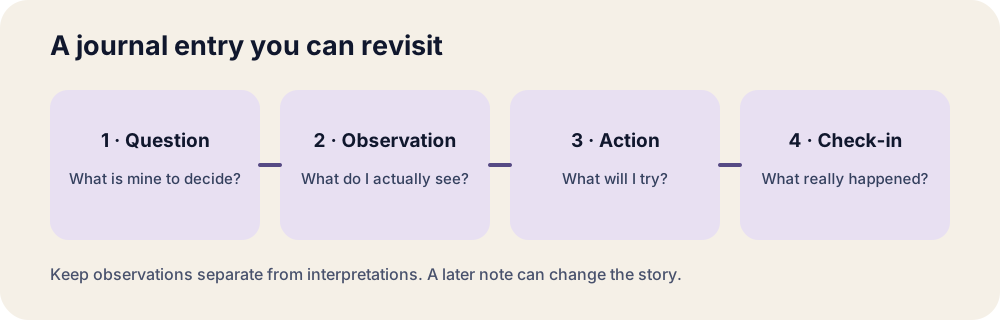
- Question. Name the situation within your control. "What do I need to consider before I answer?" gives you more room to think than "Will they say yes?"
- Observation. Record the card, whether it was upright or reversed if you use reversals, and two or three details you notice in the image. Describe first; interpret second.
- Action. Write one modest thing you can try or ask. Tarot need not settle the decision for you.
- Check-in. Choose a time to return. Note what you did, what you learned from the situation, and which parts of the reading still seem useful—or do not.
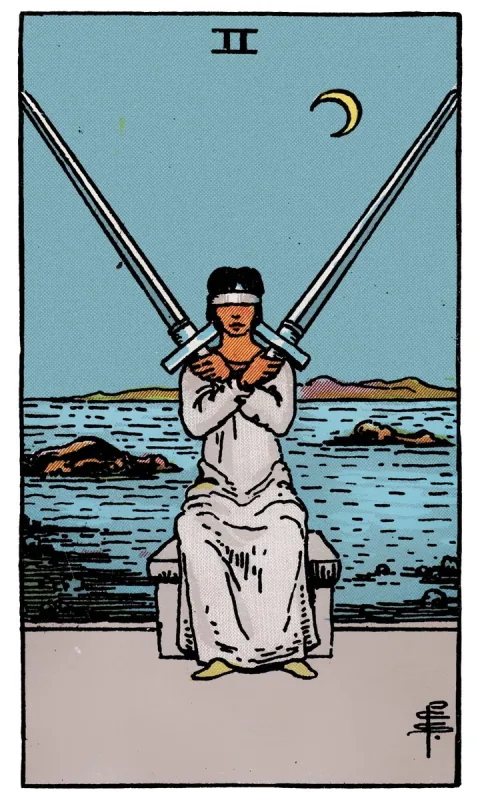
The distinction between observation and interpretation matters. "The figure is blindfolded and holds two crossed swords" is something you can point to in the picture. "I am avoiding a choice" is an interpretation you can test against your circumstances. Both can belong in a journal, but labeling them separately keeps a vivid image from becoming a fixed verdict.
Copy this one-card tarot journal template
Date and question:
Card and orientation:
What I can see in the card:
My first interpretation (tentative):
Other possible reading:
One action or question for real life:
When I will check back:

Later check-in
What I actually did or learned:
What still fits, and what does not:
What I would ask differently next time:
If seven lines feel like too much, keep only the question, card, one observation, one action, and a later check-in. The journal is a tool for reflection, not a record-keeping contest.
A filled-in example: the Two of Swords
This example is fictional. It shows how to use the template; it is not an account of a real reading or outcome.
Date and question: Monday. "What should I consider before accepting another project this week?"
Card: Two of Swords, upright.
What I can see: A seated figure wears a blindfold and holds two crossed swords; water is behind them.
First interpretation: I may be delaying a choice because both options carry a cost.
Other possible reading: I may simply need one missing fact, such as the actual deadline.
Action: Ask for the scope and due date before replying.
Check back: Friday, after I have asked and made a decision.
The Arcana card guide describes the Two of Swords as a quiet stalemate and suggests naming a postponed decision. The journal entry uses that as a prompt, then returns to the practical question: what information is missing? It does not say the card knows whether the project will go well.
A later fictional note might read: "The deadline turned out to overlap with work I had already promised. I declined. The 'missing fact' reading helped more than my first thought about being indecisive." The value comes from comparing a first story with later evidence, including when the first story was wrong.
How often should you write?
Try one card when a real question arises, or set aside a few minutes for a daily reflection if you enjoy a routine. You do not need a new card for every anxious thought. If you keep repeating the same question, pause and ask what concrete information or conversation would help more than another draw.
You can use Arcana's one- or three-card online reading and its 78-card guide as starting points. When using a card guide, write your own observation before reading the supplied meaning; then note what the guide adds or challenges. A personal journal can live in whichever notebook or app you choose. Arcana's privacy page explains how its own notes and reflection data are handled; check the storage behavior of any other app separately.
What to review after a few entries
Look back for questions you keep asking, actions that helped, and interpretations you later changed. You might notice that certain images draw your attention repeatedly. That does not establish a future event or a universal card meaning; it may simply show which themes are worth thinking about in your current circumstances.
When a note no longer fits, write that down too. A journal that records misses as well as resonances is more honest and more useful than one that only preserves impressive-sounding moments.
Common beginner questions
Do I have to memorize all 78 meanings first?
No. Start with what is visible in the card and what the question asks. Use a card guide when you want another perspective, and note the difference between the guide's language and your own situation. You can learn card patterns gradually.
Should I journal reversed cards differently?
Record the orientation, then consider several possibilities rather than automatically calling a reversed card negative. Arcana's card guides include upright and reversed or blocked interpretations. Keep the question and real-world context in view.
What if nothing "happens" after the reading?
That is a valid check-in. Write what you did, what information you gained, and whether the card was helpful at all. The journal is for examining your thinking and choices, not scoring predictions.
If you want to try the method now, open a one-card reading, copy the short template above, and give yourself a date to check back.